V Security and Civil Society Conference 2025 in Estonia: Strengthening Development Cooperation and Security across Regions
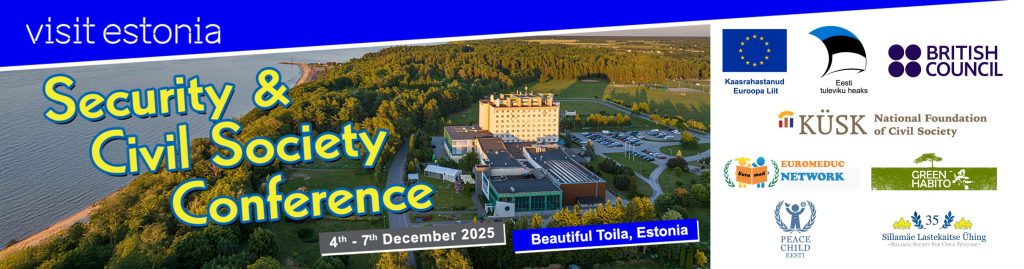
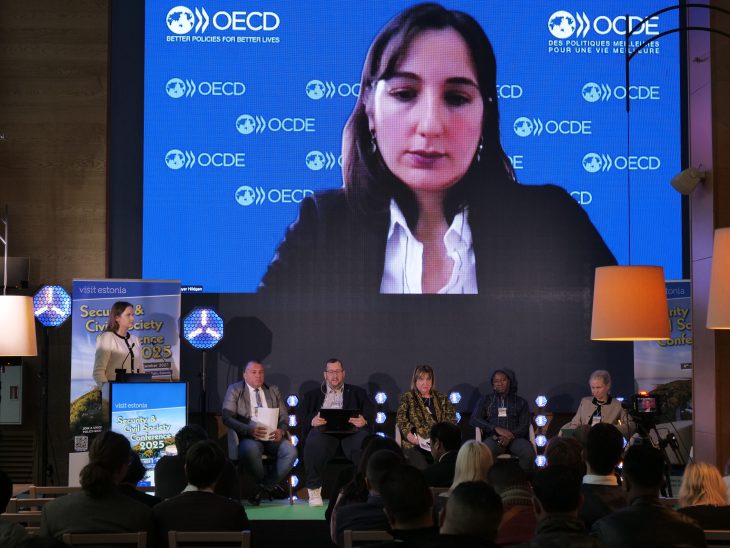
The V Security and Civil Society Conference 2025 took place on 5-7 December 2025 in Toila Spa Hotel, Estonia, bringing together international policymakers, civil society leaders, development experts, academics and youth representatives to address critical global challenges at the intersection of security, development cooperation, humanitarian aid and community resilience.
Organised by international consortsium of partners (including of Peace Child Estonia, Sillamäe Society for Child Welfare, “Green Habito” and “Euromeduc network”, with support from the European Union Cohesion Policy Fund, Estonian National Foundation of Civil Society (SA Kodanikuühiskonna Sihtkapital) and British Council Estonia.
The conference focused on the theme “The impact and effectiveness of development cooperation on European and global security in times of turbulence.”
The programme featured three intensive days of keynote presentations, panel debates and working group sessions. It was designed to promote cross-sectoral dialogue, strengthen cooperation between governments, NGOs, researchers and civil society actors, and ultimately shape a shared Conference Declaration (https://conference.sscw.ee/declaration2025/) outlining actionable strategies for future development cooperation.
The conference formally opened on the morning of 5 December with welcoming remarks and keynote speeches from prominent figures in European and international development: Kairi Saar-Isop, Director General of the Department for Development Cooperation and Humanitarian Aid at the Estonian Ministry of Foreign Affairs, Maria Gratschew, Director of the Põhjamaade Ministrite Nõukogu esindus Eestis, Elis Paemurd, Deputy Head of the (Euroopa Komisjoni esindus Eestis) European Commission’s Representation in Estonia and Rilli Lappalainen, President of the CONCORD Europe Network. These addresses set the tone for the high-level discussions that followed, conveying a shared commitment to inclusive, resilient and future-oriented development cooperation across regions.
Following the keynote session, participants engaged in several panel discussions featuring experts from international organisations, research institutions and civil society.
Key topics included:
- Development and Aid Policy in 2025 – Analysing emerging challenges and expectations for development assistance in an increasingly complex geopolitical environment.
- Global Challenges and Their Impact on Estonia and the World – Considering climate change, human rights, democratic resilience and humanitarian crises as interconnected drivers of global instability.
- The Future of Development Cooperation in Turbulent Times – Exploring adaptive pathways for international cooperation amidst shifting global power dynamics and rising uncertainties.
Each panel facilitated robust debates and exchange of best practices among participants from Europe, Africa, the Mediterranean and beyond, bridging policy insights with practical approaches.
Saturday’s High-Impact Sessions and Public Debates
On 6 December, the conference continued with keynote talks that deepened thematic discussions:
Rebecca Eriksson is a Junior Research at Nordregio (Sweden), presented on “What’s Next for the Global Development Agenda?”, emphasising forward-looking strategies for international cooperation. Throughout the conference, working groups collaborated on drafting the official Conference Declaration.
Parallel public debates brought together specialists to examine resilience against cognitive warfare, cyber threats and disinformation, as well as the role of youth and community organisations in translating cooperation into local impact. Participants also engaged in practical sessions, thematic exchanges and visits to local Estonian civil society organisations (Mondo, KAÜ, Narva Museum etc) /and culture institutions, strengthening mutual learning and partnership opportunities.
By the closing session, the conference had fostered strong commitments from participants to advance collaborative frameworks for resilient development cooperation, emphasising civil society’s essential role in shaping futre policies and partnerships.
- Photos from the conference can be found here: LINK
- Video recording from the first and II day of the conference is available here: LINK
- Conference declaration 2025 can be found here: LINK
On behalf of the organisers we would like to express our sincere gratitude to the British Council Estonia, National Foundation of Civil Society (KÜSK), Estonian Centre for International Development, European Commission’s Representation in Estonia, Estonian Ministry of Foreign Affairs, Organisation for Economic Co-operation and Development, Center for Global Development Europe, Stockholm Environment Institute, MARTA Centre, Enabel, Latvian Central Finance and Contracting Agency, Concord Europe and many others for their support and contrbutions.